3rd & 4th Gen F-Body Pinion Angle Guide

How to Set Pinion Angle on a 3rd or 4th Gen F-Body (Camaro & Firebird)

Setting the correct pinion angle on a 3rd or 4th generation F-Body is critical for drivetrain reliability, traction, and ride quality. This is especially true for Camaro and Firebird models equipped with a torque arm rear suspension or aftermarket suspension components.

This article breaks down the UMI Performance video featuring Ramey Womer, walking through each step with timestamps and explaining how to properly measure and adjust pinion angle to reduce driveline vibration and premature component wear.

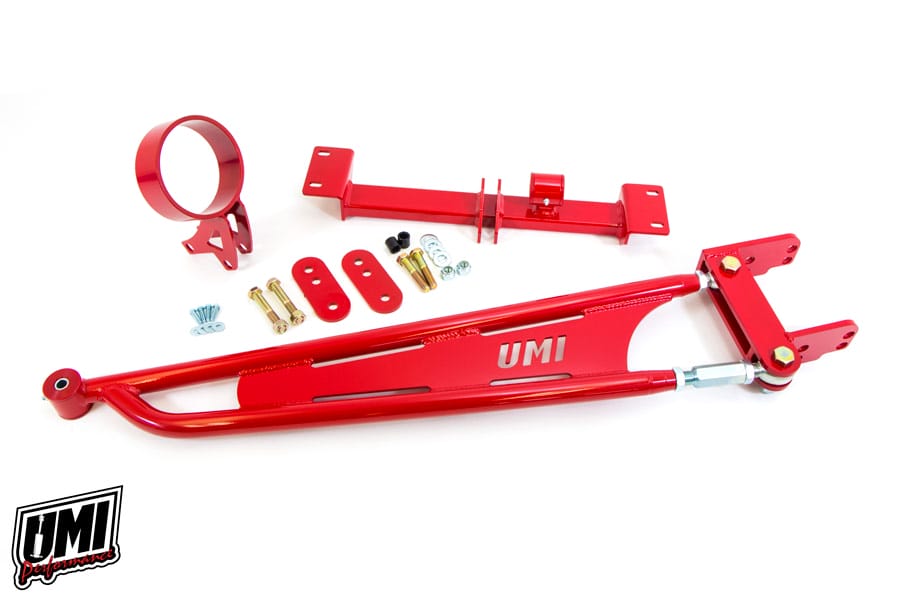
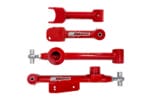
2200 – 1993-2002 GM F-Body Tunnel Mounted Torque Arm, Stock Exhaust, Kooks LT’s

SKU: 2200

In stock

Price range: $569.99 through $729.99
Select options This product has multiple variants. The options may be chosen on the product page

What Is Pinion Angle and Why It Matters on F-Bodies

Pinion angle is the angular relationship between the rear axle pinion flange and the transmission output shaft. On torque-arm cars like the 1982–2002 Camaro and Firebird, incorrect pinion angle can cause:

  • Driveline vibration at speed
  • Poor traction under acceleration
  • Accelerated U-joint and driveshaft wear

Even small changes in ride height or torque arm geometry can significantly affect pinion angle, making adjustment necessary after suspension modifications.

Tools Required to Adjust Pinion Angle

The video outlines the basic tools needed to correctly set pinion angle:

  • Digital or analog angle gauge
  • Adjustable torque arm
  • Jack stands or vehicle lift
  • cribbing blocks
  • Standard hand tools

An adjustable torque arm is essential, as factory fixed-length arms do not allow precise correction. UMI offers many adjustable torque arm configureations to suit your needs.

Step 1: Measure the Stock Pinion Angle

Video Timestamp: 00:18 – 01:45

Before making any changes and adjustments, the current pinion angle is measured. A digital or analog angle gauge is placed directly on the harmonic balancer bolt to establish a baseline reading of engine and transmission angle. on our UMI Performance 4th gen Camaro it measured out to 2.45 degrees tailshaft down.

It is important not to measure from the oil pan because it will give you an incorrect reading. In our case it measured 0.3 degrees which is incorrect.

Once you have the engine angle measured go to the rear end and measure the angle of the rear differential. it should land around 2 degrees less than the engine angle. On our example we have a 2.45 degree engine angle so the differential angle should measure at 0.45 degrees nose up. It is important to do this measurement on cribbing blocks with the suspension loaded.

This initial measurement is critical. Without it, adjustments become guesswork and can easily overshoot the desired angle.

Step 2: Adjust Torque Arm

Video Timestamp: 02:24 – 03:18

With the vehicle safely supported and the UMI Adjustable Torque Arm installed, loosen the mounting hardware and adjuster lock nuts. Note: one of the sides is reverse thread. This allows the rear axle housing to rotate slightly when adjustments are made.

Using a 1" wrench turn the adjuster to move the angle until we achieve the angle 2 degrees lower than the originally measured engine angle. In our case this will be 0.45 degrees nose up.

Step 3: Selecting the Proper Angle

Video Timestamp: 03:18 – 4:08

We chose 2 degrees off of the engine angle because when your suspension is under load we want the driveshaft to be parallel. This is just a baseline to get us started. The amount your suspension will load is based on what bushings you have installed. This measurement is an approximation so don’t get hung up on trying to adjust to a perfect number. 

  • Rubber Bushings:              -3 degrees
  • Polyurethane Bushings:    -2 degrees
  • Rotojoint/Rod-End:           -1 degrees

This should give you a very solid starting point to understanding pinion angle and how to create an ideal set up for your vehicle and application. 

Step 4: Fine Tuning and Torqueing

Video Timestamp: 04:10 – 4:30

Once the desired pinion angle is achieved, all hardware is tightened to specification. The pinion angle is measured one final time to confirm nothing shifted during tightening. This step ensures the adjustment remains stable under acceleration and load.

It is important to note that any time you are changing your ride height you need to re-check your pinion angle as this will cause the differential to sit in a different position.

After driving if you notice a slight vibration you can adjust the torque arm a quarter turn at a time to help eliminate those harmonics. If you still have questions feel free to reach out to [email protected].

Closing Thoughts

As outlined in this video and article the UMI Performance 3rd & 4th Gen Torque Arm makes pinion angle adjustment straightforward and repeatable while delivering real performance gains.

Its tunnel-mounted design improves traction, weight transfer, and overall driveline stability, while adjustable pivot brackets allow precise instant center and pinion angle tuning for street or track use.

By reducing wheel hop, negative driveline harmonics, and unwanted suspension movement under load, the torque arm maintains proper drivetrain alignment during acceleration, helping ensure accurate pinion angle setup and long-term performance.

Check out the Team UMI 4th generation Camaro SS